SAHSWI updates

20 08 2026

May 16, 2026 Fika and Bishop Hill

The May Fika meeting at Martin Luther Lutheran Church, featured Awardwinning Author Martha Bergland and her Husband Jim Uhrinak presentation about their visit to Bishop Hill.

Today, Bishop Hill is recognized for its historical significance, with several structures listed on the National Register of Historic Places and designated as a National Historic Landmark. Visitors can explore the village’s rich history through museums, galleries, and cultural events that celebrate its Swedish roots. Bishop Hill remains a vibrant community that honors its past while continuing to thrive as a living historical site. Please see below link to the presentation handout:

Vasa Order of America National Archives

Member Karen Snowberg, Cultural leader in Vasa Order Linde Lodge no. 492 informed about the Vasa Order of America National Archives. The Archives Board selected Bishop Hill, Illinois as the site for the building in the early 1970s. Many factors contributed to the selection: a Swedish community, geographically centered in the United States, low crime rate, and easily reached from all directions. The rural setting offers more stability than the urban migratory mode of life. Bishop Hill is a National and Illinois State Historic Site.

King Oscar II

Recently SAHSWI received an e-mail from Jamie Prost who offered to donate an old book written in Swedish. The book released in 1907 was about King Oscar II, who was King of Sweden from 1872 until his death in 1907. He was also King of Norway from 1872 to 1905. It is the final publication of his biography, issued after his death on Dec 8, 1907.

King Oscar II was very popular among the Swedish immigrants to America. In the introduction of the biography it was mentioned he was the most respected ruler of any country or state at the time. The Swedish Americans were proud of their home country king as he was celebrated as the most gifted monarch in Europe. King Oscar thought important to be trusted to keep Sweden an independent free state.

Nordstjernan

Nordstjernan (The Swedish North Star) is the only classic Swedish newspaper in the U.S. with readers in every state. One year subscription is $67 for 16 printed issues delivered to your home.The only classic Swedish newspaper in the U.S. with readers in every state. The issues include a unique mix of trivia, traditions, news summaries and opinion pieces and
easy-to-read columns that have become their landmark.

A new recipe has been added to our Food Heritage Dessert and Bakery page. Barbara Sue McLaughlin provided a recipe from her Grandmother.

My grandmother was a Swedish cook in Minneapolis. The first time she made this cookie for me was in1950. I was four, and she asked me what I thought. I said “Delicious” and that is how they got their name!”

Do you have a story to tell about recipe for food, dessert and bakery, or drink. If so bring it to a Fika meeting and we will publish it on the SAHSWI website. Food Heritage | Swedish American Historical Society of Wisconsin

Midsommar 2026

12 07 2026

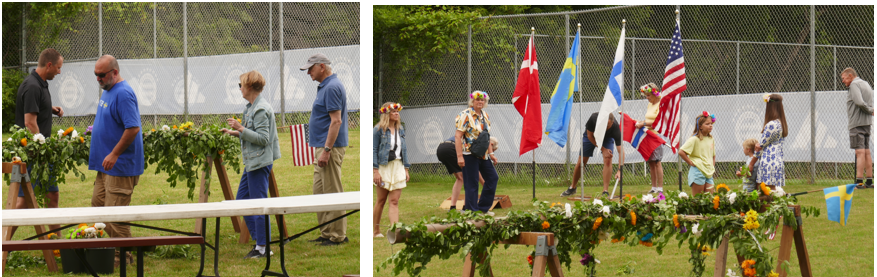
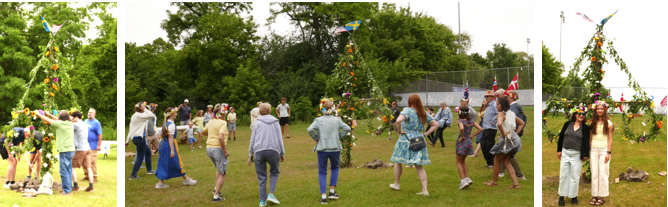
Midsommar 2026 was celebrated Sunday, June 21, 2026, 11 AM – 2 PM at Heidelberg Park by Bavarian Bierhaus in Glendale. Members and visitors could enjoy making the flower crowns, decorating the Maypole, participate in the procession raising the pole, then dancing around it. However, the Midsommer celebration was different this year.

The Midsommar Pole

During setup and assembly of the pole, part of it cracked and the bottom part had to be removed, which resulted in a very short Maypole. This was both good and bad since there had been safety concern previously, handling the quite heavy and tall Maypole. Less to decorate, easier to raise, and we could still enjoy to dance around it, and it served good for a photo op. .

The Flower Crowns

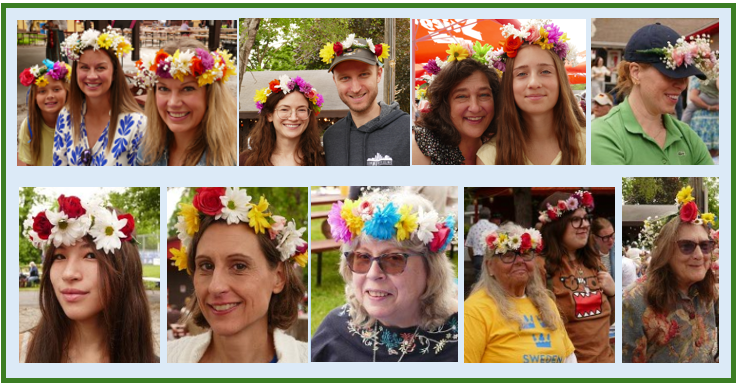
Making and then wearing a flower crown is one of the most favorite activities during Midsommar celebration. SAHSWI member Karin Konrad prepared and was leading this activity.

Swedish Folk Music and Scandinavian Folk Dance

The timing of the Midsommar celebration was different from previous years. There were two events sharing the park this year. Heidelberg Park was the venue for both Midsommar and Fathers Day celebration with a large German Brass Band playing. So to avoid interference the Midsommer celebration was rescheduled to start 2 hour earlier with our Folk music and Folk Dance could be enjoyed before the start of the German music.

Everybody enjoyed the popular violin and guitar group Goda Vänner playing traditional Swedish Folk music, and the Lykkeringen dancers performing Scandinavian Folk Dances

The Food

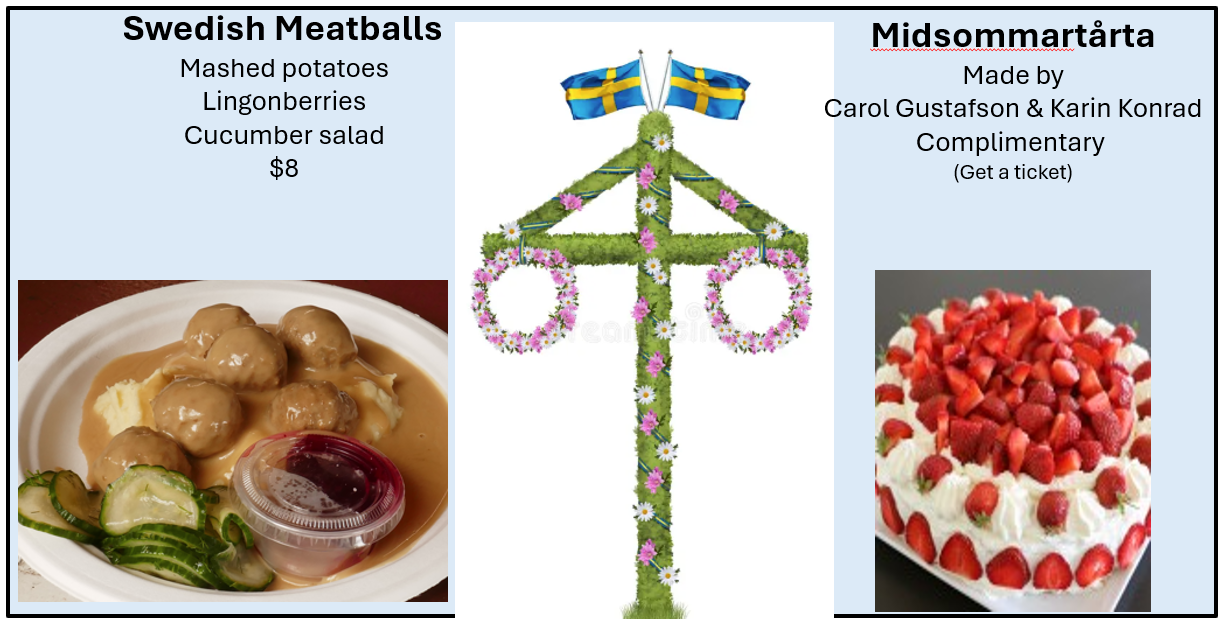
A few days before start of the Midsommar celebrations we got the news the Chef scheduled to prepare the Swedish food was sick and in the hospital, so it was no way the Swedish meatball dish could be served. Thanks to Carol Gustafson’s quick actions the meatballs were back on the menu and consumed by grateful celebration attendants, actually they sold out early. Carol also teamed up with Karin Konrad and baked cake and offered a piece of Midsommartårta to all Midsommar attendants.

Kubb and Activities for the Children

Children could enjoy Sac Raises, Tug a War, and Corn Hole game, and Face painting and Crafts. As is tradition at Midsommar some participants played a game of Kubb set-up and supported by SAHSWI Vice President John Elliott.

Swedish-American History and Genealogy

Much of the activies of the Swedish American Historical Society of Wisconsin relates to History of Swedish immigration to Wisconsin, two stations were set up to learn about these topics. Martha Bergland and her husband Jim Uhrinak were managing the History station focusing this year on information about Bishop Hill, which was a Swedish colony established by Erik Janson and his followers, the religious sekt Jansonists in 1846.
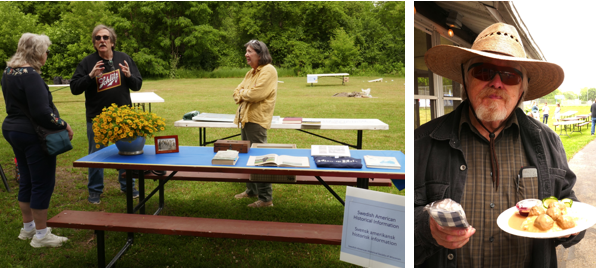
John Engel, SAHSWI Board member and the leader of the Swedish Genealogy Research Group, managed the Genealogy station and answered questions and discussed ways to research family heritage.

John Engel in discussion with Susan Worden and Martha Bergland. SAHSWI Member and Photographer Bob Stetson enjoying Swedish Meatballs

Tack så mycket, Tusen tack.

Although last minute changes to Midsommar 2026 it turned out to be a great celebration. We thank all volunteers that made it happen, including the following and others.

  • Emceeing and making all announcements. Tim Redman.
  • Welcome desk: Susan and Del Worden, Tracy Redman, Preparation by Bev Wenzel
  • Midsommar Pole assembly and decoration: Erik Ehrengren, Liza Ekstrand, Tim Redman, Rudy and Karin Konrad
  • Leading dance around the Midsommar Pole: Amanda Balistreri
  • Flowercrowns: Karin Konrad, Cookie Anderson and grandchild.
  • Swedish Folk music, Goda Vänner: Carol Gustafson, Mary Stetson, Eva Christensen and Parry Horn
  • Scandinavian Folk Dance: Lykkeringen Dancers: Lizabeth Bjork, Seija Freiberg, Chris Hansen, Doug and Joelle Freiberg, Kari Toth Steve Burghardt, Ann LeBaron, Philip Reikdahl, Robert and Caroline Sanders.
  • Childrens games, crafts and face painting: Camden Ehrengren, Danielle Jackson, Kris Laufer, and Elisabeth Elliott.
  • Scandinavian and American Flags: Rolf and Liza Ekstrand
  • Photographers: Bob Stetson, Lisa Kaltenberg (videos)
  • Kubb Game: John Elliott


“Emma’s Story” at the next Fika meeting

29 09 2025

Next Fika meeting is scheduled Saturday, October 18, 2025, starting at 1:30 PM at Martin Luther Lutheran Church9235 West Bluemound RoadMilwaukee located just east of the Milwaukee Zoo. 

At the meeting the Annual Business meeting will be conducted including presentation of Annual reports by officers and committee leaders. There will be election of two board members. Immediately following the Annual Meeting member Karen Snowberg will present the Program: Emma’s story.

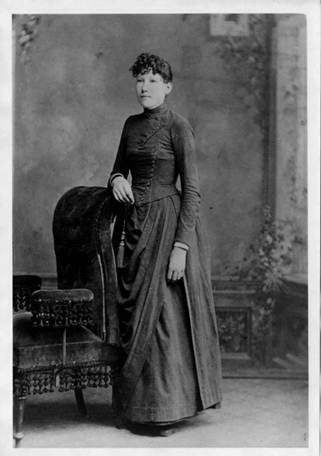
Emma came to this country from Öland, Sweden in1882 at the age of 16. In the great emigration from Sweden to America, a larger percentage of its population left the island of Öland than from any other area of Sweden. Emma would never talk about her family in Sweden or her life there. 50 years after her passing, through extensive research by the Snowbergs in the US and the Snöbergs in Sweden her life in Sweden was fleshed out. Emma was Karen Snowberg’s Grandmother or in Swedish Mormor (Mother’s mother). Come to the meeting and find out about Emma’s life in Sweden, and how the Snowbergs found out.

After the presentation enjoy traditional Fika the Swedish way. If you can, bring a dish to share. Do you have a favorite Swedish recipe you want to share? If so, bring it and we can add it to the website Swedish Food Heritage page.


Fäbodkultur

12 04 2025

At the Swedish American Historical Society of Wisconsin (SAHSWI) 2025 March Fika meeting member and Vasa Order Linde Lodge President Brent Erickson made a presentation about Fäbodar and the practice of Summer Farming that has existed in Sweden and Norway for thousands of years. Fäbodkultur is a UNESCO-Listed Heritage of Traditional Summer Farming.
Summer Farming refers to the practice of moving livestock to outlying lands in late spring. It entails knowledge concerning animal husbandry and herding, dairy production, land management and handicrafts. It also involves herding calls, songs, storytelling and rituals. Summer farms may be private or collectively run, and some organize sustainable tourism and sell dairy products. The practice has inspired literature, performing and visual arts. It is a source of pride, continuity and identity for many Scandinavian societies.

Brent discussed his family ties to this unique culture. He is a descendent of Der Erik Jakobson, (Der referred to the farm named Dergården). Der Erik Jacobssons daughter Sarah was Brent’s father’s Grandmother and she lived on a Fäbod during the summers. Dergården is located in Myrbacka, which is close to Noret where Sarah was born. Brent’s father’s grandfather lived in Järna (also called DalaJärna). All these places are close and located in Dalarna, Sweden. The entire Der Erik Jabobsson family emigrated to Jackson County, Wisconsin in 1883. (Brent has also contributed a story about his ancestor’s emigration available on this website My Swedish Heritage.)

Brent’s presentation included several videos of practices part of the Summer Farming tradition. The Cow Horn (Swedish Kohorn) was used to call the cows home for milking. (This is a link to a YouTube video and may include advertising)

Another method for calling cows is kulning, a herding call and vocal technique practiced by Scandinavian women. (This is a link to a YouTube video)

Scandinavian Summer Farming or Swedish Fäbodskultur was included in UNESCO Intangible Cultural Heritage list in 2024.

Swedish Fäbodskultur video.

Below is a link to Brent’s whole presentation, including more information, pictures, and videos and also about the Fäbod established by immigrants at Bishop Hill, Illinois

Fäbodar in Sweden by Brent Erickson March 22, 2025


Fika meeting and 2024 updates

22 01 2025

Don’t forget the 2025 first SAHSWI Fika meeting on Saturday January 25, starting at 1:30 PM at Martin Luther Lutheran Church, 9235 West Bluemound Road, Milwaukee featuring Cookie Anderson presentation about Swedish Authors. January 25 Fika meeting.

Updates from the end of 2024

The end of the year is always a hectic time, we all celebrate Thanksgiving, Christmas, and New Years. In addition, we have all important SAHSWI meetings and celebrations, our annual meeting in October, our participation in the Holiday Folk Fair International for 3 days in November, and our beautiful Lucia celebration in December. And, this year we were invited to celebrate the Swedish New Year at Lakefront Brewery. Here are some updates from these events.

  • Annual Meeting

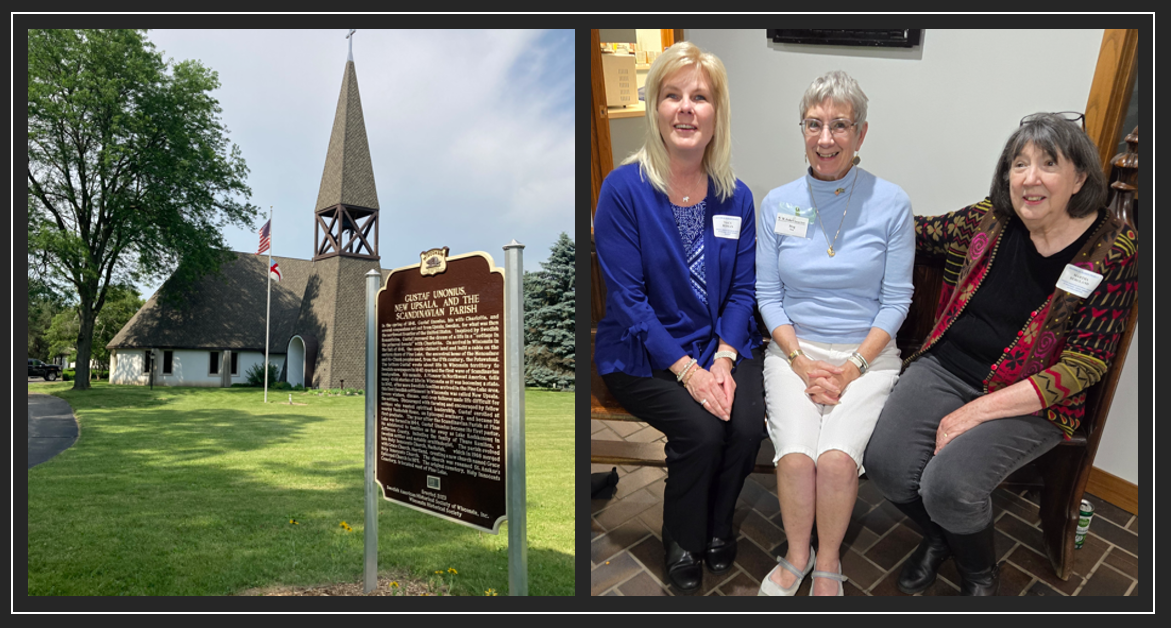
2024 SAHSWI Annual General meeting was held on October 19, 2024, at Martin Luther Lutheran Church, Milwaukee. Congratulations to Janet Taylor, Irene Roberts, and Meg Haag who were elected to each serve a 3-year term on the Board of Directors. Already Board Directors Janet and Irene were re-elected to serve an additional 3-year term. We are very pleased to welcome Meg Haag as a newcomer on the Board. Meg is a member of St. Anskar’s Episcopal Church in Hartland and was together Sarah Hintz project team members on the State Historical Marker project, recognizing Gustaf Unonius, New Upsala, and The Scandinavian Parish. For the last three years Meg and Sarah hosted meetings at the church. Meg provided information and coordination with local area churches and Nashotah House Seminary and arranged the Heritage Tour in 2023 visiting Nashotah House, the Holy Innocents Cemetery, Chenequa Village Hall (the site of New Upsala) and St. Anskar’s Church.

Historical Marker at St. Anskar’s Church. Meg Haag in between Tracy Redman and Martha Bergland

Following the election, Officers and Committee leaders’ annual reports were presented. These reports are available on the SAHSWI website.

2024 annual reports.

A tribute to Harry H Anderson

The program at the Annual General Meeting was dedicated to Harry H Anderson who sadly passed away in May 2024. For a report on the program please go to

Link “A tribute to Harry H Anderson”

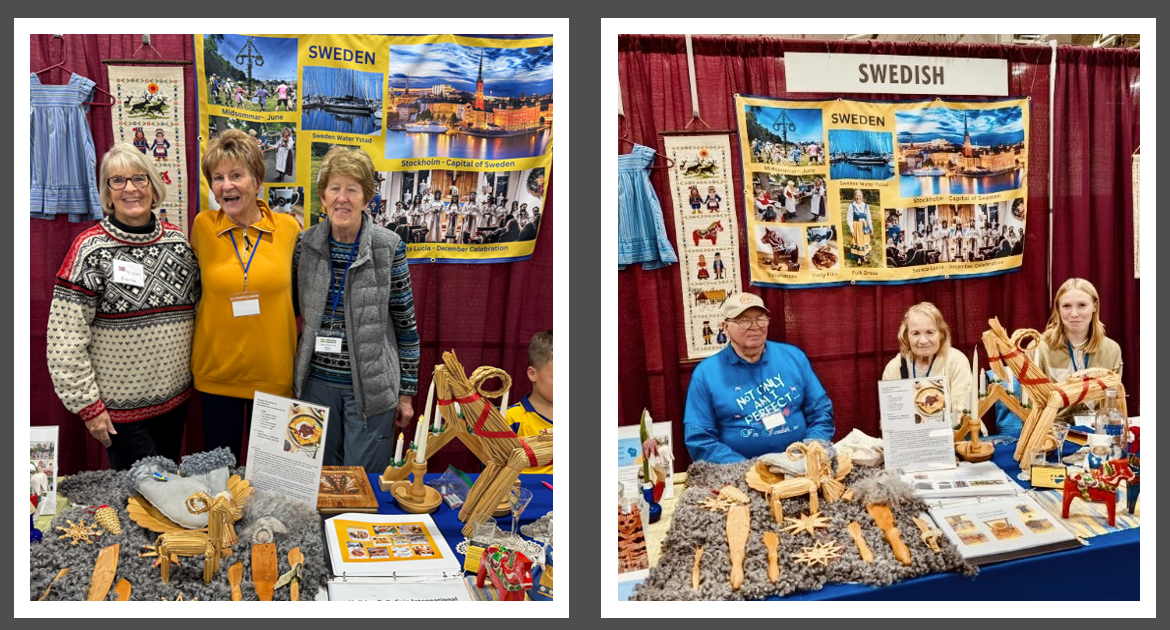
  • 2024 Holiday Folk Fair International

Swedish American Historical Society of Wisconsin together with Vasa Order of America, Linde Lodge represented Sweden in the Nordic Council of Wisconsin cultural booth at the Folk Fair at Milwaukee State Fair Park held from Friday November 22 to Sunday November 24. The theme for the Folk Fair was “Celebrate the Culture of Traditional Art”. Traditional Art embodies painting, pottery, sculpture, textiles, metalwork, and many others.

Left: SAHSWI members John Engel and Brent Erickson (Linde Lodge President). Right: Lisa, Joseph and Eli Kaltenberg

Items displayed included Table Runners, Pottery, Crystal, Wood Carvings, Gotland Sheep Skin, Children’s Clothing, and Straw Ornaments. Each reviewed in the attached short document.

Swedish display items

18 volunteers from Linde Lodge and SAHSWI represented Sweden during the three days, each working a 4-hrs shift. In the list below L=Member of Linde Lodge, S=Member of SAHSWI. Thank you very much to all volunteers.

Left: Arlette Johnson (Sons of Norway), Liza Ekstrand, Elaine Johnson Right: Allen, Linda and Anja Stenmark (Linde Lodge)

In a separate area a display was set up where a traditional dessert dish from each country was presented.

Nordic Council submission of typical desserts for each of the Nordic Countries
  • Lucia celebration 2024

The Lucia celebration has previously been reported. See 2024 Lucia celebration.

  • Swedish New Year celebration.

Several SAHSWI members participated in a Swedish New Year celebration at Lakefront Brewery. We appreciate this initiative by Lakefront Brewery. It was a sold-out event, and very well received by all who attended. What a great idea to celebrate the New Year at local 5 PM, midnight in Sweden.

Countdown to Swedish New Year…..Gott Nytt År


The Vikings

7 02 2024

More than 50 SAHSWI members and visitors participated in the Fika meeting on Saturday January 27 at Martin Luther Lutheran Church, Milwaukee, where SAHSWI Vice President John Elliott presented the program about the Vikings. 

John discussed the definition of the Viking as a member of the Scandinavian seafaring warriors who raided and colonized wide areas of Europe from the 9th to the 11th century and whose disruptive influence profoundly affected European history. The word Viking entered the modern English language in 1807, at a time of growing nationalism and empire building. In the decades that followed, enduring stereotypes about Vikings developed, such as wearing horned helmets and belonging to a society where only men wielded high status. Vikings were a specific group of traders defined by their mobility, and this did not include the bulk of the Scandinavian population that stayed at home.

Viking crews would frequently lose members and pick up new recruits as they traveled, combining dissident elements from different backgrounds and cultures. Vikings were not a race but an ethnic diverse group. Only 10% of the Scandinavian population today has Viking DNA.

John further explored the unauthorized use of Nordic (Viking) imagery by some less than honorable groups and the impact it has on the overall image of the Vikings.  He discussed who the Vikings were and the misunderstandings that prevail today.

Please find here the complete Viking presentation

The presentation generated a lot of interest and discussion, followed by the traditional Fika with food and baked goods brought by meeting participants.