Next Fika meeting is scheduled Saturday, October 18, 2025, starting at 1:30 PM at Martin Luther Lutheran Church, 9235 West Bluemound Road, Milwaukee located just east of the Milwaukee Zoo.
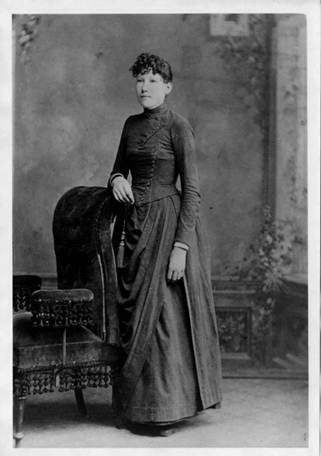
At the meeting the Annual Business meeting will be conducted including presentation of Annual reports by officers and committee leaders. There will be election of two board members. Immediately following the Annual Meeting member Karen Snowberg will present the Program: Emma’s story.
Emma came to this country from Öland, Sweden in1882 at the age of 16. In the great emigration from Sweden to America, a larger percentage of its population left the island of Öland than from any other area of Sweden. Emma would never talk about her family in Sweden or her life there. 50 years after her passing, through extensive research by the Snowbergs in the US and the Snöbergs in Sweden her life in Sweden was fleshed out. Emma was Karen Snowberg’s Grandmother or in Swedish Mormor (Mother’s mother). Come to the meeting and find out about Emma’s life in Sweden, and how the Snowbergs found out.
After the presentation enjoy traditional Fika the Swedish way. If you can, bring a dish to share. Do you have a favorite Swedish recipe you want to share? If so, bring it and we can add it to the website SwedishFood Heritage page.
The 2024 Santa Lucia celebration was held at Fox Point Lutheran Church on December 8, 2024. 75 people attended the event which included a formal Lucia program followed by Swedish Fika, dance around the Christmas Tree and Santa greeting the children.
The celebration of Santa Lucia in Sweden on December 13th of each year ushers in the Christmas season. The Legend of Lucia goes back to the year 304 AD in Syracuse Italy. It was there the beautiful Lucia, a highborn maiden, lived with her parents. It is also in that city Lucia suffered a martyr’s death, for becoming a Christian. She was a courageous woman, who in the early days of Christian persecution, brought food to her fellow Christians, who were hiding in the catacombs from the pagan persecutors. In order to carry her offerings with both hands, Lucia lighted her way by putting the candles in her hair to light her way. Lucia administered to the poor, bringing them food and hope. The legend tells us, the maiden became an official saint.
Among the Scandinavian countries, Sweden is perhaps the country, where the Lucia celebration has its deepest roots. Tales of her courage were carried to the Northern Scandinavian countries by missionaries. Early, in the darkness of the morning, on the 13th of December, Lucia appears dressed in a white gown with flowing red ribbon around her waist and a crown of candles on her head. She is accompanied by her attendants and star boys. They go from house to house in the darkness of the morning singing, offering hot coffee, cookies and special Lucia bread made with saffron.
2024 Lucia Program
The Lucia program was directed by Stina Lemery. The Lucia story was told by Swedish School Teacher Amanda Balistreri and she also introduced all the traditional Swedish songs that were performed by the children. Matt Byszynski played the piano.
Nadia Wright is the Milwaukee 2024 Lucia. Nadia, an 8th grader from New Berlin, lives with her family and embraces a rich heritage of Swedish, Finnish, Irish, and Italian roots. Having visited Sweden multiple times, where her mom is originally from, she feels a special connection to her Swedish background. A true fashionista with a flair for acting, Nadia envisions a future where she might become a lawyer. However, what truly sets her apart is her warm and compassionate heart. She deeply cherishes her family, friends, and pets, always showing great care for those she loves. While this is her first time serving as Lucia, Nadia has been part of the Swedish School Lucia tradition since she was 7 years old.
Tomtar:Oscar Erkander, Nova Balistreri, Orion Balistreri, Arlo Ehrengren
The Lucia program include traditional Lucia songs, e.g. Tomtarnas Julnatt (Santa Christmas Night) and Goder Afton (Good evening)
Fika
After the Lucia program Fika was served consisting of Coffee, juices along with homemade Kanelbullar (Cinnamon buns) and Pepparkakor (Gingerbread cookies). The Kanelbullar were home baked by members Liza Ekstrand, Carol Gustafson and KarinKonrad. During Fika time all participants in the celebration were invited to dance around the Christmas tree the Swedish way.
The Swedish dance “Små Grodorna”
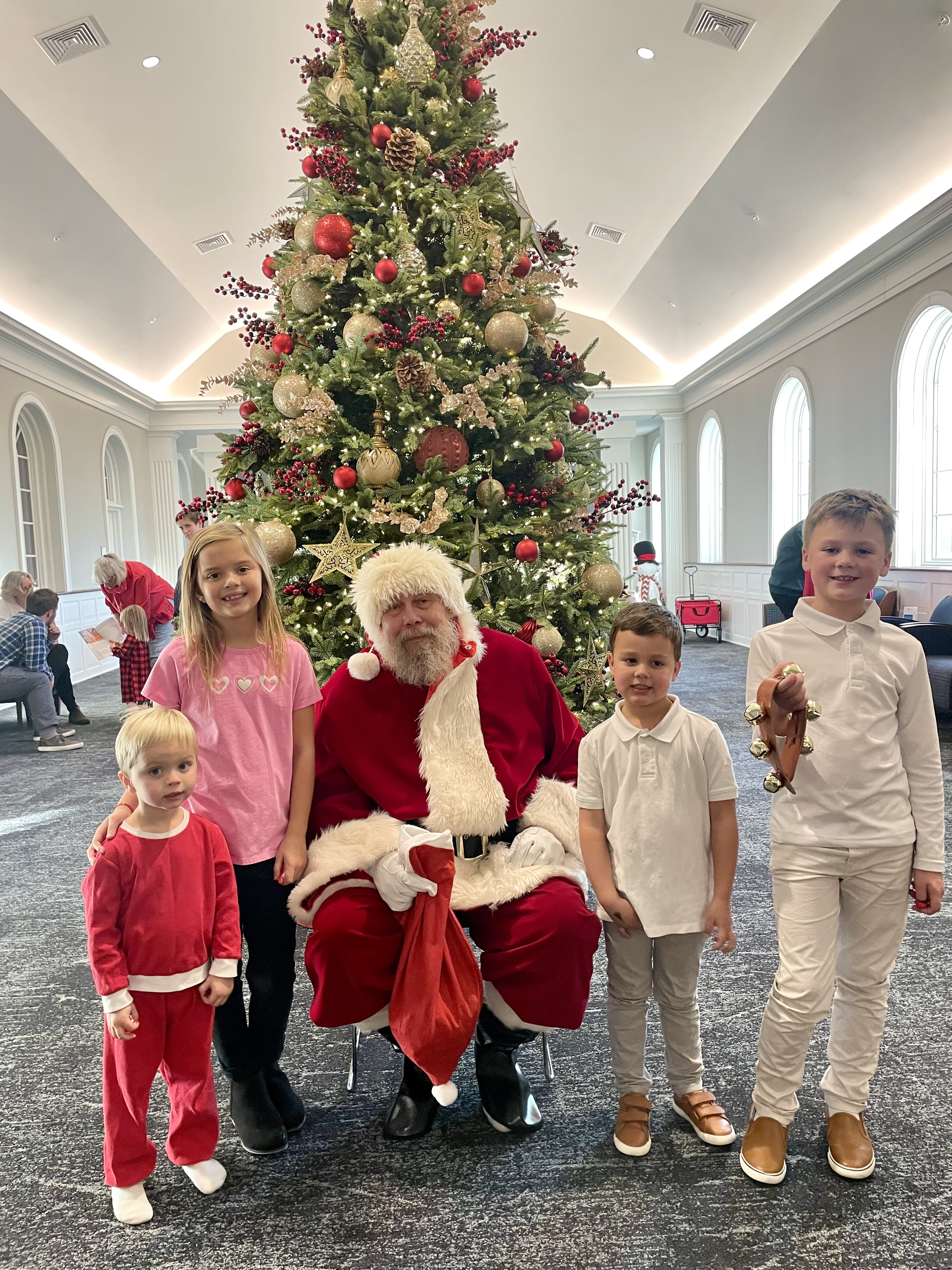
No Lucia celebration is complete without Jultomten (Santa Claus). Santa arrived and greeted the children with small toys, and asked them what they wanted for Christmas.
Tack Så mycket, (Thanks, very much) to everybody that attended the Lucia celebration and Tusen Tack (a Thousand Thanks), to everybody that have helped in the preparation and were helping during the Lucia event. Thanks to Fox Point Lutheran Church for having us and your help. Thanks to Lucia program participants and leadership. Thanks to everybody involved with Fika, and thanks Santa for coming.
More than 50 SAHSWI members and visitors participated in the Fika meeting on Saturday January 27 at Martin Luther Lutheran Church, Milwaukee, where SAHSWI Vice President John Elliott presented the program about the Vikings.
John discussed the definition of the Viking as a member of the Scandinavian seafaring warriors who raided and colonized wide areas of Europe from the 9th to the 11th century and whose disruptive influence profoundly affected European history. The word Viking entered the modern English language in 1807, at a time of growing nationalism and empire building. In the decades that followed, enduring stereotypes about Vikings developed, such as wearing horned helmets and belonging to a society where only men wielded high status. Vikings were a specific group of traders defined by their mobility, and this did not include the bulk of the Scandinavian population that stayed at home.
Viking crews would frequently lose members and pick up new recruits as they traveled, combining dissident elements from different backgrounds and cultures. Vikings were not a race but an ethnic diverse group. Only 10% of the Scandinavian population today has Viking DNA.
John further explored the unauthorized use of Nordic (Viking) imagery by some less than honorable groups and the impact it has on the overall image of the Vikings. He discussed who the Vikings were and the misunderstandings that prevail today.
The presentation generated a lot of interest and discussion, followed by the traditional Fika with food and baked goods brought by meeting participants.



 Swedish American Historical Society of Wisconsin